Contemporary Installation Art – Immersive, Site-Specific & Multimedia Public Installations

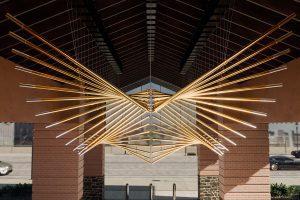
Contemporary installation art stands at the intersection of creativity, space, and viewer engagement. It’s a form of public art that transforms environments into immersive experiences, challenging traditional boundaries of galleries and museums. In the portfolio of Dion Art Studio, installation art takes on new dimensions — from kinetic installations to large-scale public art projects that redefine how audiences interact with space.
Origins and Evolution of Contemporary Installation Art
The emergence of modern installation-based art originates in early 20th-century avant-garde movements. Artists began experimenting beyond traditional frames and canvases, creating spatial environments that engulf viewers physically and emotionally. This trend evolved significantly by mid-century, influencing generations to follow.
During the 1960s and 1970s, visionaries like Allan Kaprow and Christo unveiled spatial installations that transformed both art landscapes and viewer participation. This was a pivotal shift towards treating spaces as canvases for immersive art experiences, fundamentally altering perceptions of what art could be.
By the late 20th century, technological advances propelled new mediums into installation art — introducing light, sound, movement, and digital components. This expansion deepened the dialogue between viewer and venue, allowing artists to create interactive public art that blurred the line between observer and participant.
Core Characteristics Defining Contemporary Installation Art
Immersive Experiences
Unlike static artworks, contemporary installation art crafts multi-sensory environments. Artists manipulate light, sound, temperature, scale, and spatial arrangement to draw viewers into the work. Immersion transforms the visitor from a passive spectator into an active participant, directly engaging with the artist’s conceptual vision.
Site-Specific Installations
Many installations are inseparable from their environment. Site-specific public art considers the history, architecture, and community of a location. Whether in an urban square, a natural setting, or the atrium of an airport, these works acquire meaning through their context, resonating deeply with audiences.
Multimedia Components
Contemporary installations often merge traditional craftsmanship with advanced technology — digital projections, LED lighting, kinetic mechanics, and soundscapes. This integration of art and technology creates layered experiences that address complex themes such as globalization, identity, and climate change.
Visionary Artists and Transformative Works
- Janet Echelman – Weaving Time and Space
Janet Echelman reshapes urban airspaces with monumental, fluid sculptures of knotted fiber and light. Her installation 1.8 Renwick merges material and experience, inviting reflection on time and our inner selves.
If my art can create an oasis to contemplate the larger cycles of time… that’s all I could ask.
Her projects demonstrate how public art installations can inspire introspection in the heart of busy cities.
Ann Hamilton – Crossing Mediums and Messages

Ann Hamilton’s the event of a thread uses textiles, audio, and motion to create a constantly changing environment. Visitors experience sound, touch, and sight in a choreography of interaction. Her work exemplifies interactive installation art as a living ecosystem where audience and artwork co-create meaning.
James Turrell – Sculpting Perception

James Turrell’s Roden Crater transforms an extinct volcano into an observatory for celestial events.
“I set up a situation and let you see. It becomes your experience.”
His work shows how site-specific installations can profoundly alter perceptions of light, space, and time.
Mark Bradford – Sociopolitical Reflections
Mark Bradford’s Mithra in New Orleans responds to the political and social history of its site. Built after Hurricane Katrina, the installation embodies resilience and community engagement, proving that installation-based public art can also serve as social commentary.
Influential Works in Contemporary Installation Art
The Weather Project – Olafur Eliasson
Simulated a glowing sun inside Tate Modern’s Turbine Hall, prompting conversations about climate and community.
Shibboleth – Doris Salcedo
A crack in the museum floor symbolizing deep social divides and migration narratives.
Infinity Mirrored Room – Yayoi Kusama
An endless mirrored space of lights and reflections, blending cosmic scale with intimate self-reflection

Premier Venues for Contemporary Installation Art
- Venice Biennale – Global platform for cutting-edge public and installation art.
- Documenta, Kassel – Conceptual, site-specific installations embedded in the city’s fabric.
- Tate Modern, London – Turbine Hall as a stage for monumental spatial art.
- MoMA, New York – Merging technology, culture, and identity through installation.
Economic and Cultural Impact of Installation Art
Contemporary installation art contributes to cultural tourism, urban regeneration, and economic growth. Cities commissioning signature installations — like Pegasus Ascendant by Dion Art Studio — benefit from increased foot traffic, global media attention, and stronger cultural identity.
Installation Art in Corporate and Commercial Spaces
Beyond museums and public plazas, large-scale installations are increasingly present in corporate headquarters, airports, and retail spaces. These works enhance brand storytelling, create memorable visitor experiences, and integrate art into daily life.
Educational and Social Value
Installation art fosters community engagement and cultural literacy. Workshops, guided tours, and interactive elements invite public participation, making art accessible and relevant across generations.
The Future of Contemporary Installation Art
With the integration of AR, VR, AI, and eco-friendly materials, installation art will continue pushing boundaries. Future works will merge physical and digital realities, address urgent environmental issues, and become even more collaborative — transforming public spaces into living canvases.
Conclusion
Contemporary installation art is more than an artistic movement — it’s a transformative force shaping how we experience public spaces. From iconic works by global masters to innovative projects by studios like Dion Art Studio, these installations merge creativity, technology, and cultural meaning, ensuring their relevance for decades to come.
FAQ – Contemporary Installation Art
Large-scale, immersive, and often site-specific works that engage multiple senses and invite active viewer participation.
It attracts tourism, fosters cultural identity, and transforms public spaces into memorable landmarks.
LED lighting, kinetic mechanics, sound systems, digital projections, augmented reality.
Yes — many contemporary works incorporate movement, sensors, and digital platforms to encourage visitor interaction.
Written by

Сo-founder & Creative director of DION ART
Master of Arts in Art Education, Public Art (School of the Art Institute of Chicago, USA)
Share this post
Trustindex verifies that the original source of the review is Google. A very stylish and modern installation that fits perfectly into the urban environment.Trustindex verifies that the original source of the review is Google. Incredibly beautiful artTrustindex verifies that the original source of the review is Google. The light installations are unreal. Recently went to Soul Space Cleveland and NüIQ Wellness and they look insane. They add such a cool vibe to the spaces and made the experience way better. Did a sound bath at Soul Space and the lights made the event way more enjoyable and relaxing.Trustindex verifies that the original source of the review is Google. Dion art is like nothing I’ve ever seen before. It truly is mesmerizing. The art work exhibits true creativity and innovation.Trustindex verifies that the original source of the review is Google. I am fortunate enough to experience the beauty of NuIQ Wellness Lounge and Soul Space on a daily basis. The choreography of light and movement transforms static spaces into immersive environments. It’s not just something to see; they are something to feel, and to remember.Trustindex verifies that the original source of the review is Google. Pictures don’t do this beautiful art installation justice. Here at Soul Space we host multifaceted workshops and wellness classes, the addition of Dion art fixtures completely brings the space to life and is perfect for the space and what we do here. The capabilities of the installation is a whole immersive experience in itself. So beautiful!Trustindex verifies that the original source of the review is Google. Amazing things come from Dion Art! The light installations are so unique and elevated!Trustindex verifies that the original source of the review is Google. I’m a Nurse Practitioner at NuIQ Wellness Lounge in Cleveland, Ohio. I watched the vision come to life and how Dion Art completely transformed our space with their kinetic chandeliers and a bold parametric ceiling installation. To say it is completely breathtaking is an understatement. They also placed the most beautiful agate piece in the spa that I have ever seen- complete with a calming light show within it. Not only is the company so professional and meticulous about every detail, they are also very passionate about their work. Nothing but the best! To watch each of my patients come through our doors mesmerized is absolutely gratifying. I highly recommend Dion Art to anyone seeking to elevate their space with distinctive and artistic installations!Trustindex verifies that the original source of the review is Google. Kinetic Art Installation & Parametric ceiling! This installation is a stunning blend of artistry and engineering that brings movement and light to life in such a unique way. Watching the fluid, precise motions of each component is almost hypnotic, and it feels like you’re witnessing art that’s alive. The level of detail and craftsmanship is incredible, and the lighting adds such depth, creating shadows that shift and change as you watch. Dion Art has truly crafted something special here. It’s thought-provoking, calming, and captivating all at once. If you enjoy art that pushes boundaries and engages all your senses, this is a must-see!Trustindex verifies that the original source of the review is Google. The Cleveland Crystal, a stunning public art installation located on the West Mall in downtown Cleveland, is a mesmerizing work of art. Designed by the acclaimed firm Designers Dion, the Cleveland Crystal features captivating color-changing effects that enchant visitors. The firm is renowned for creating impactful art installations across the country, and the Cleveland Crystal is one of their most impressive creations.