Public Art Installations in London: Sculptures and Interactive Art in the City
London has long treated public art as an essential layer of the urban environment rather than a decorative afterthought. Sculptures, temporary installations, digital artworks and large-scale commissions appear across plazas, museums, riverfront promenades and commercial districts. In this context, public art London is not simply a cultural initiative — it is part of how the city constructs identity, activates public space and reinforces its position as a global cultural capital.
Over the last two decades the scale and ambition of London art installations have increased dramatically. Large urban sculptures now appear in financial districts, mixed-use developments and museum plazas, often commissioned by developers as part of placemaking strategies. At the same time, temporary installations and interactive artworks have become a defining feature of London’s seasonal cultural programming.
The result is a city where public sculpture London operates simultaneously as cultural infrastructure, tourist attraction and architectural landmark.
Public art and London's urban identity
London’s relationship with public art is deeply connected to its layered urban history. Unlike cities built around a single masterplan, London evolved gradually over centuries. Public artworks therefore act as anchors that help structure complex urban environments.
Sculptures often mark important civic locations: squares, bridges, museum entrances or waterfront promenades. In many cases they become navigational reference points for residents and visitors moving through dense districts.
A classic example is the monumental lions surrounding the column in Trafalgar Square. These sculptures function as both symbolic national monuments and everyday meeting points within one of the most visited public spaces in the city.
Another defining element of London’s approach to public space art London is the city’s willingness to experiment with temporary works. Unlike many cities where sculptures are expected to remain permanent, London actively encourages rotation and experimentation, allowing public spaces to evolve visually over time.
Famous public art installations in London
Fourth Plinth Program — a platform for contemporary sculpture
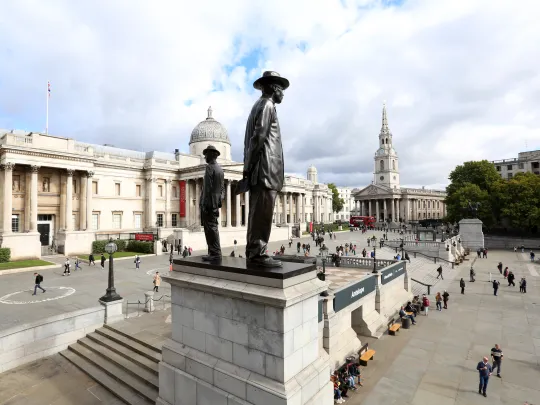
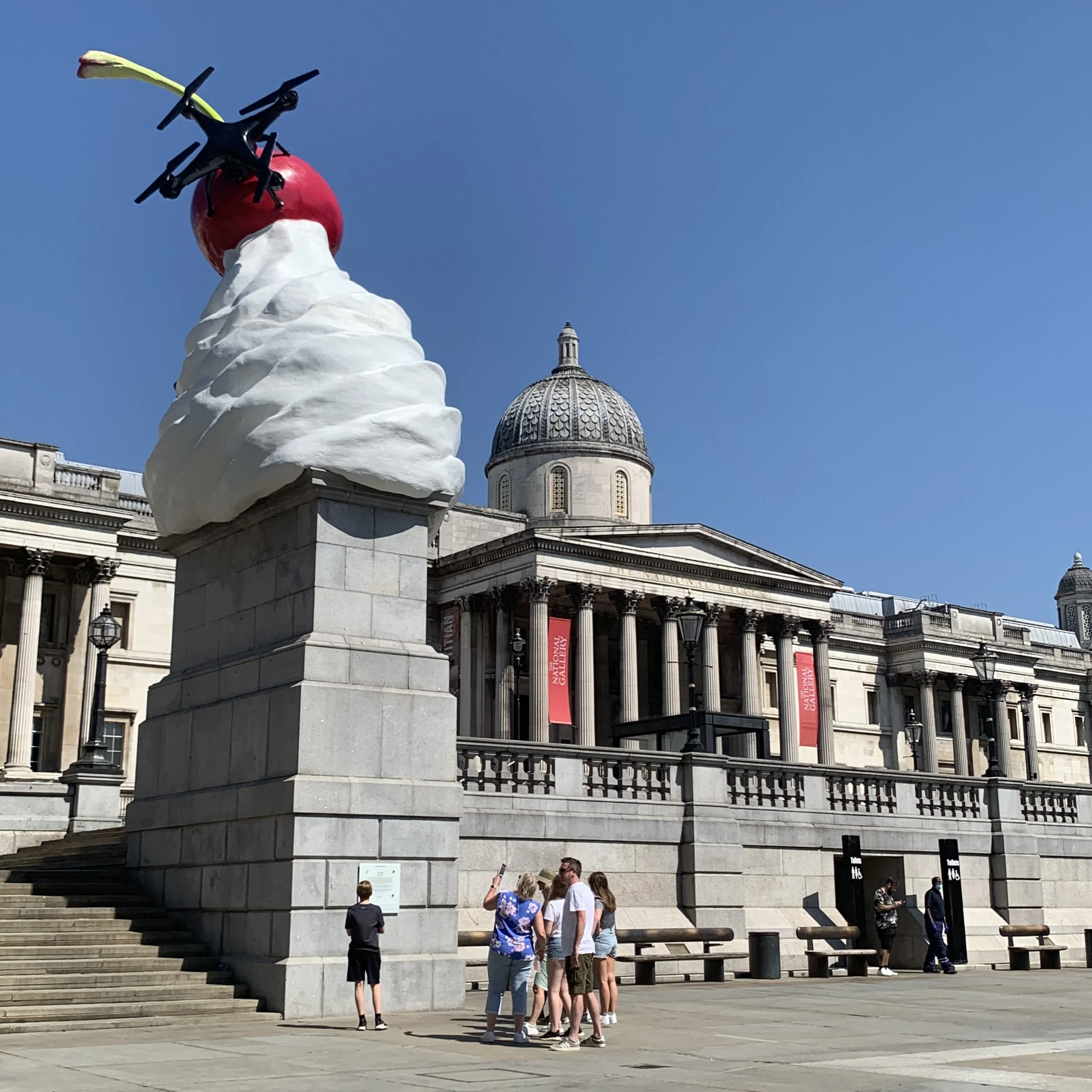
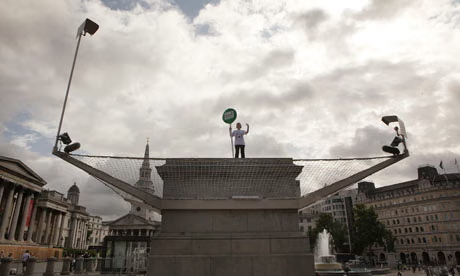
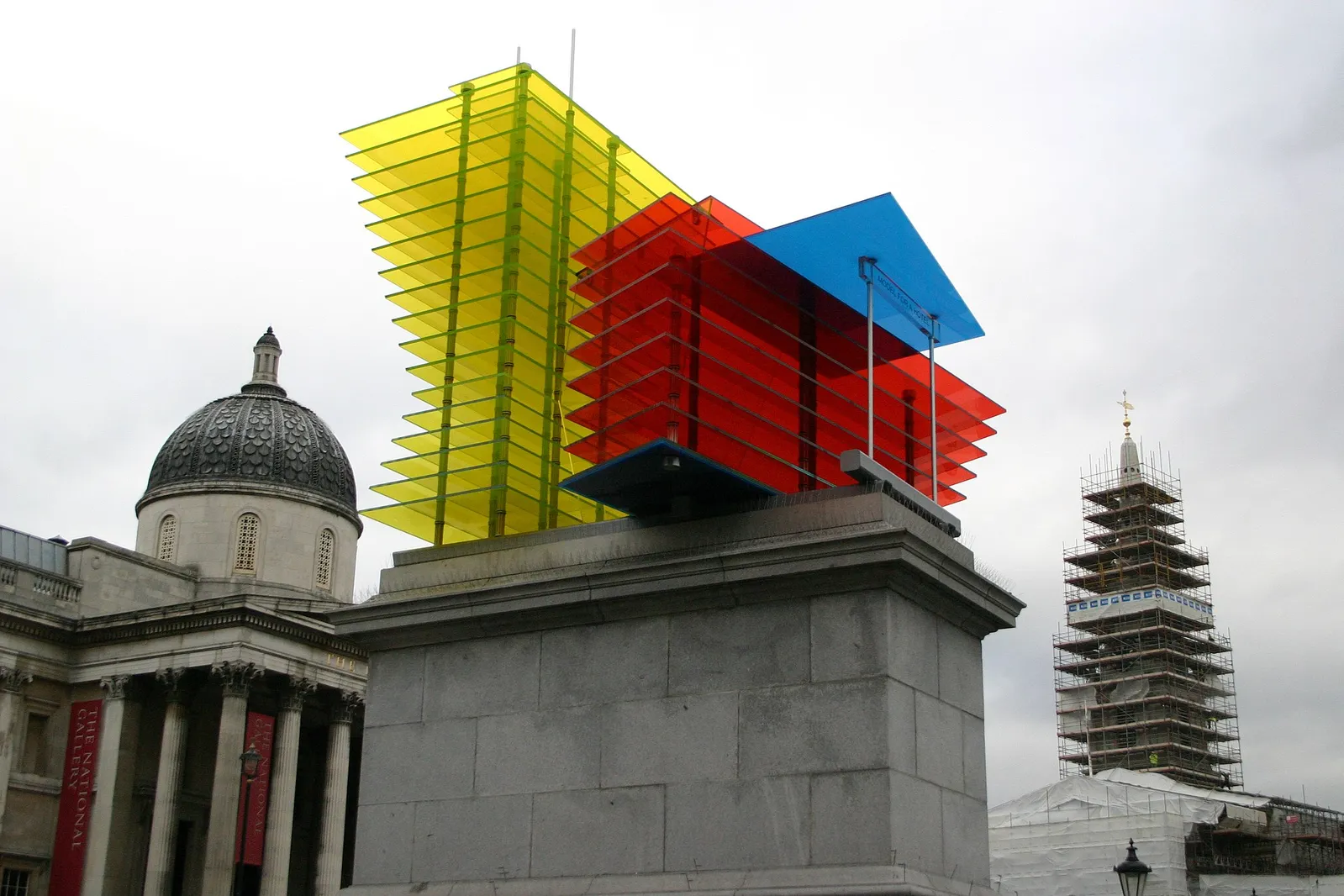
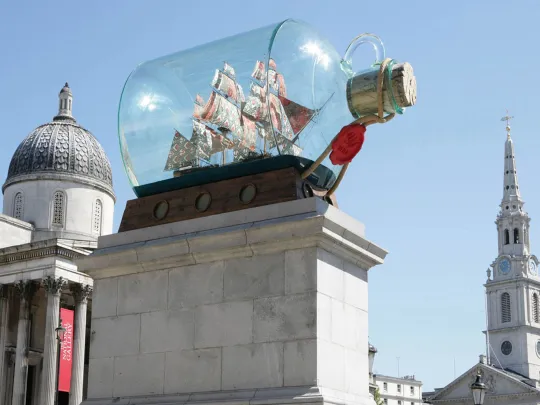
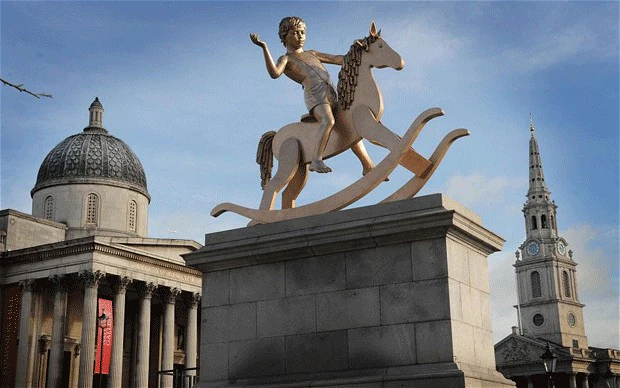
One of the most influential public art initiatives in the world is the Fourth Plinth program in Trafalgar Square. The empty plinth in the square is periodically used to display temporary sculptures by contemporary artists.
Among the most widely discussed installations was “The Invisible Enemy Should Not Exist” by Michael Rakowitz, a reconstruction of an Assyrian sculpture destroyed during the Iraq war. The project demonstrated how urban sculpture London can engage with political history and cultural memory.
From an urban perspective, the Fourth Plinth operates as a constantly evolving landmark that encourages repeat visits and international media attention.
The Angel of the North — Regional Icon of Public Sculpture
Although located slightly outside London in Gateshead, the monumental Angel of the North by Antony Gormley has profoundly influenced contemporary public sculpture across the UK.
The sculpture stands over 20 meters high and spans 54 meters across its wings. It has become one of the most recognized landmark sculptures in Britain, demonstrating how a single artwork can define the identity of an entire region.
Its success influenced the commissioning of large-scale sculptures across London’s public spaces.

The Turbine Hall Installations at Tate Modern
The Turbine Hall of Tate Modern has hosted some of the most ambitious contemporary installations in Europe.
One of the most memorable projects was “The Weather Project” by Olafur Eliasson, which filled the enormous hall with an artificial sun created from hundreds of lamps and reflective surfaces.
Visitors gathered beneath the glowing sphere as if it were a public square indoors. The installation demonstrated how architecture art London can transform industrial spaces into immersive environments.
Interactive and Digital Art in London
London has increasingly embraced interactive art London and digital installations that respond to visitors or environmental data.
One of the most recognizable examples is the illuminated pedestrian bridge Millennium Bridge, where lighting installations have been used during festivals to create responsive light environments.
Another example is the immersive digital exhibitions hosted at Outernet London, a media district built around massive LED screens that surround visitors with digital artwork and interactive environments.
These projects illustrate how digital art London is expanding the definition of public art. Instead of static sculptures, installations increasingly involve programmable media surfaces, real-time graphics and responsive lighting systems.
Interactive art also appears in commercial developments where developers use media installations to create memorable visitor experiences.

Architecture and Art Integration
One of the defining characteristics of contemporary sculpture London architecture is the integration of artworks into building design.
Rather than placing sculptures in front of buildings, architects increasingly collaborate with artists during the design phase so that artworks become structural components of architecture.
A prominent example is the sculptural tower known as ArcelorMittal Orbit, created by artist Anish Kapoor and engineer Cecil Balmond for the 2012 Olympic Park.
The structure functions simultaneously as sculpture, observation tower and tourist attraction. Its twisting red steel form has become one of the most recognizable landmarks of modern London.
Projects like this illustrate how architecture art London increasingly operates at the intersection of sculpture, engineering and urban design.
Temporary vs Permanent Installations
London’s public art strategy is distinctive because it balances permanent landmarks with temporary installations.
Permanent sculptures provide stability and identity within urban districts. They often become part of the city’s visual memory.
Temporary works, however, allow experimentation. Large annual installations appear across cultural institutions, festivals and seasonal events.
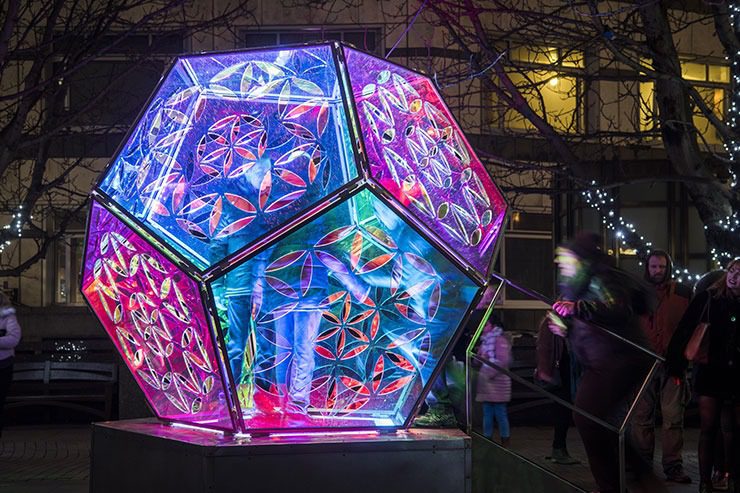
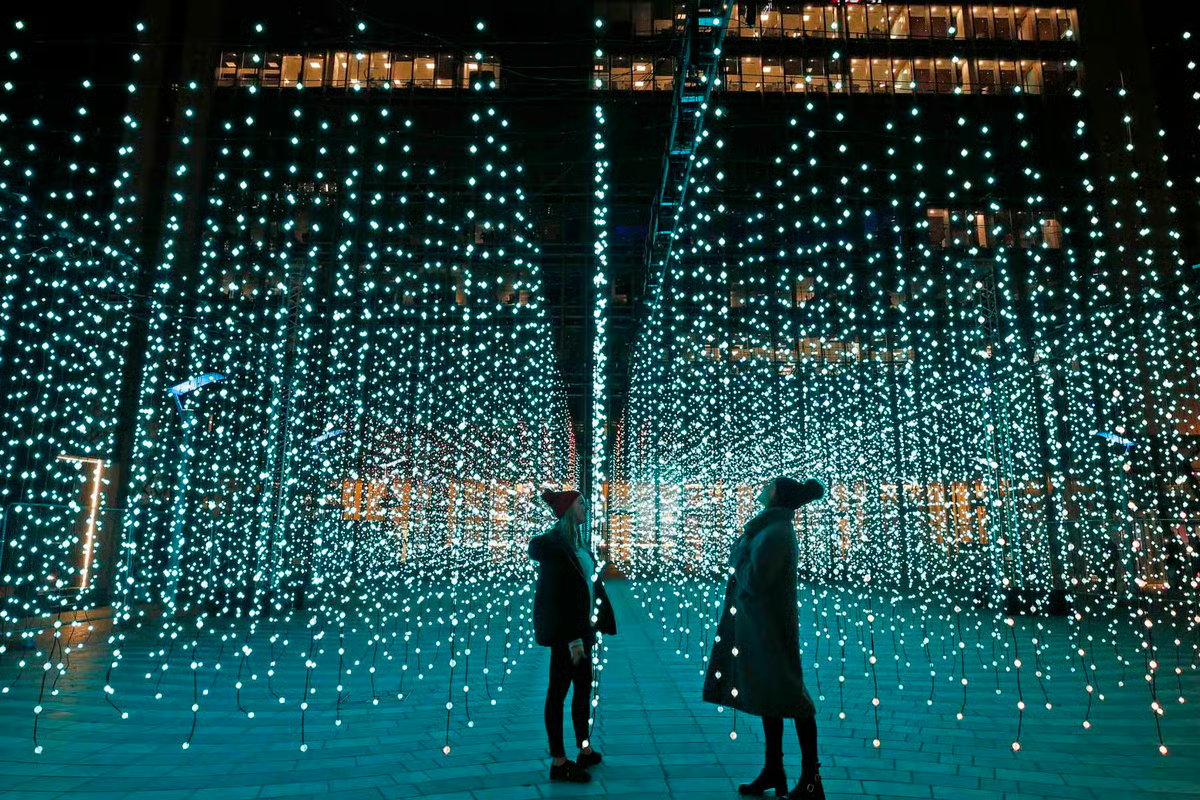
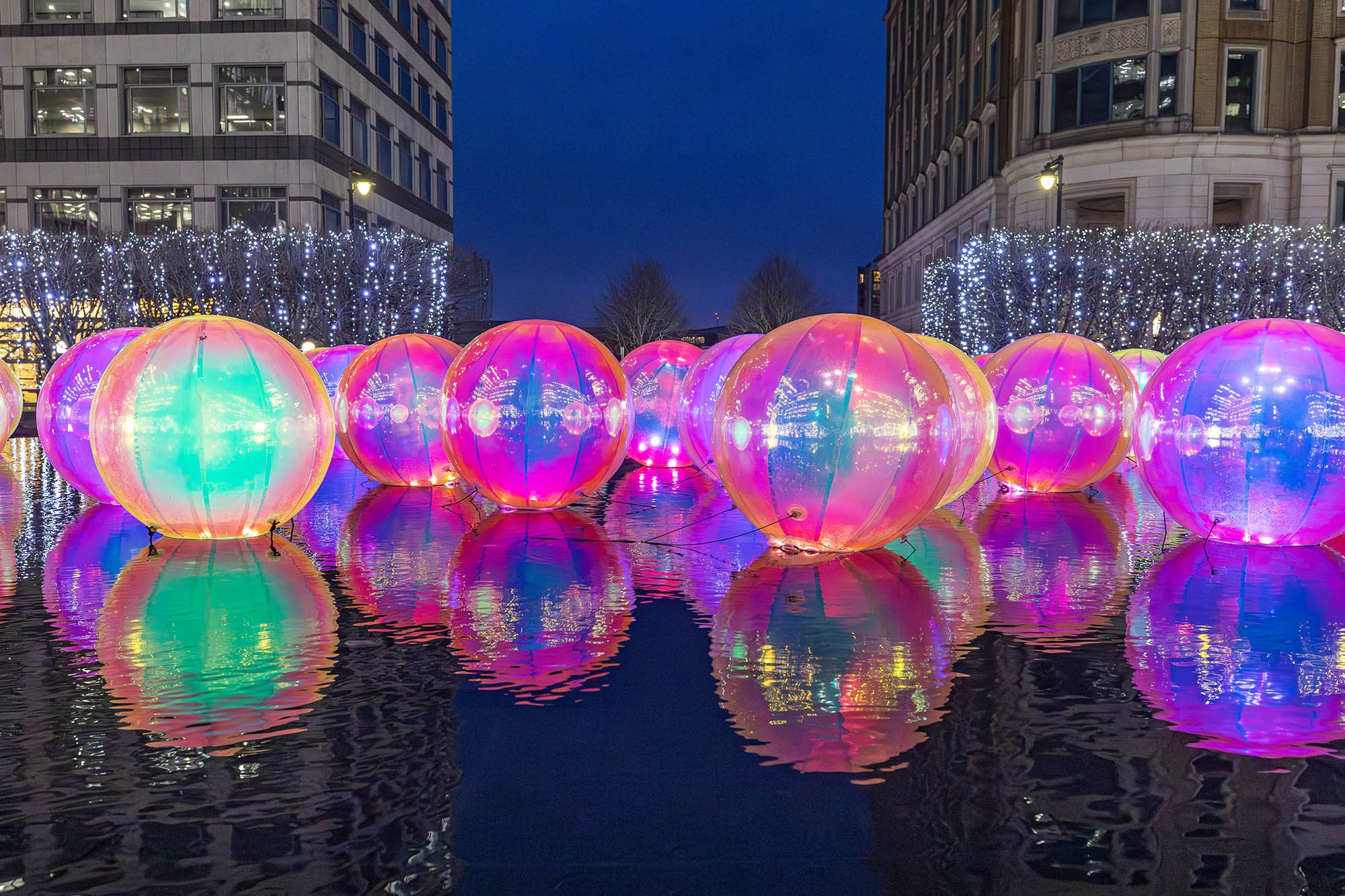
The winter light installations in Canary Wharf are a good example. Each year the district hosts a festival where artists create illuminated sculptures and interactive installations across plazas and waterfront promenades.
These projects demonstrate how city art installations London can activate public spaces during colder months and attract thousands of visitors to commercial districts.
The Future of Public Art in London
The future of public art London is increasingly connected to technology and urban regeneration.
Developers and city planners now view art installations as tools for placemaking within new mixed-use developments. Sculptures and digital installations help define the identity of districts undergoing transformation.
Large redevelopment areas such as Battersea Power Station and King’s Cross have integrated art commissions directly into their masterplans.
At the same time, new technologies are expanding the possibilities of interactive and digital art London. Responsive lighting systems, sensor-based installations and AI-driven artworks are becoming part of urban experimentation.
DION ART STUDIO working at the intersection of art, engineering and architecture, increasingly collaborate with architects to design installations that function as both cultural objects and spatial infrastructure.
As London continues to evolve, public art will remain a central tool for shaping how the city is experienced.
Public art has become an essential component of London’s urban landscape. Sculptures, digital installations and architectural artworks appear across plazas, museums and commercial developments, transforming public spaces into cultural environments.
From the rotating sculptures of the Fourth Plinth to immersive digital environments and monumental landmarks like the ArcelorMittal Orbit, London art installations demonstrate how art can shape identity, activate public space and enrich the architectural experience of the city.
Contact Us
Looking to integrate a landmark art installation into your urban or development project? Explore our portfolio or contact the DION ART STUDIO team.
Public art today is not just a cultural layer, but a spatial tool that shapes how cities are experienced. Sculptures, kinetic installations and interactive artworks define identity, structure public space and create recognizable urban landmarks.
In cities like London, art installations act as visual anchors—guiding movement, organizing perception and reinforcing the character of complex environments.
At DION ART STUDIO, we develop large-scale kinetic installations that combine artistic vision, engineering and digital technologies, creating works that operate as both cultural elements and architectural infrastructure.
The Fourth Plinth sculptures in Trafalgar Square, the ArcelorMittal Orbit, and installations at Tate Modern are among the most widely recognized.
Yes. Many installations in London are temporary and rotate regularly, allowing new artists to exhibit works in public spaces.
Interactive installations appear in districts such as Canary Wharf, Outernet London, and major museums including Tate Modern.
Many contemporary projects integrate sculptures directly into building design, creating hybrid works that function as both architecture and artwork.
Public art strengthens cultural identity, attracts visitors, and enhances the quality of urban public spaces.
Written by

Сo-founder & Creative director of DION ART
Master of Arts in Art Education, Public Art (School of the Art Institute of Chicago, USA)
Share this post