
Permanent Kinetic Installation vs Temporary Activation: What US Developers Choose
In the United States, developers are increasingly expected to create projects that feel culturally legible, commercially distinctive, and publicly memorable. This is especially true in mixed-use districts, Class A office repositionings, hospitality-led developments, waterfront destinations, and civic-facing environments where public experience is no longer secondary to asset value. Within this landscape, art is rarely discussed only as decoration. It is treated as a tool of identity, attention, placemaking, and long-term relevance.
Yet one question appears repeatedly at the decision stage: should a project invest in a permanent kinetic installation, or is a temporary activation the more strategic move? For developers, this is not simply a matter of duration. It is a question of capital strategy, leasing logic, project phase, operational appetite, brand positioning, and the kind of public life the development is meant to sustain over time.
Permanent kinetic installations and temporary activations can both generate visibility. They can both attract visitors. They can both produce press value and public recall. But they do not operate in the same way. They shape space differently, distribute risk differently, and signal very different ambitions to the market. Understanding what US developers choose requires looking beyond the surface distinction between permanent and temporary and examining how each model performs within the deeper logic of real estate.

Why this decision matters in US development
In many American projects, public-facing art is now expected to do more than enrich a plaza or lobby. It is often asked to support leasing narratives, strengthen district identity, improve public recall, and help a project compete in markets where architecture alone may not be enough to distinguish one development from another. This is especially relevant in projects that are not only delivering buildings, but attempting to establish destination value.
A permanent kinetic installation and a temporary activation may both appear capable of supporting that ambition, but they signal different attitudes from the outset. A permanent work suggests long-term commitment. It implies that the developer sees public experience as part of the enduring structure of the project. A temporary activation suggests flexibility, programmability, and a willingness to test public response before fixing the language of the place.
That distinction becomes even more important in the United States because many developments are phased, repositioned, or brought to market under changing commercial conditions. A district may open in stages. A retail-led environment may need early momentum before tenant mix matures. A Class A office asset may be repositioned to compete for a different tenant profile. A hospitality project may require launch energy before its long-term identity stabilizes. In that context, developers are not simply choosing between two art formats. They are choosing between two different models of public-space authorship.
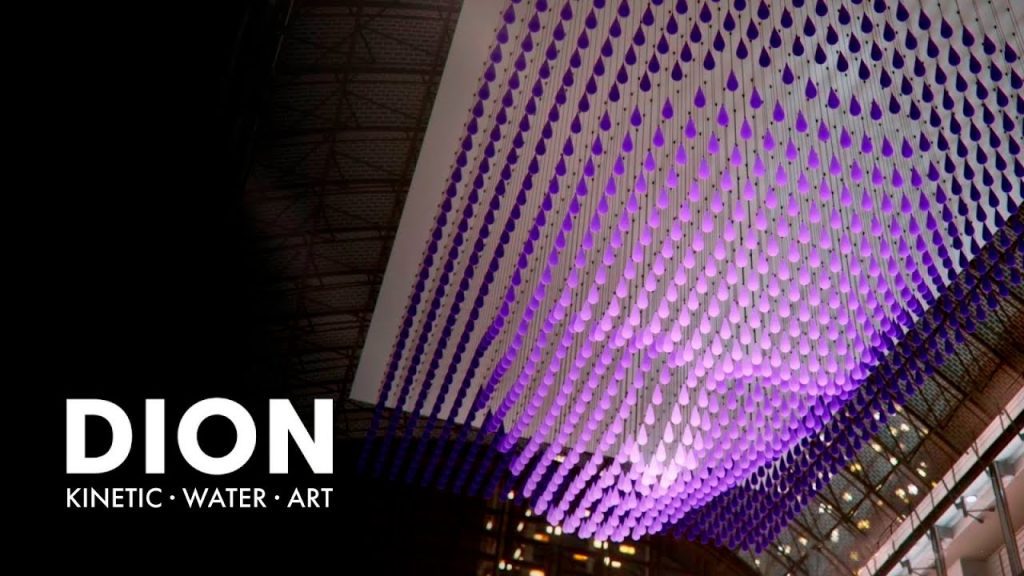
What a permanent kinetic installation actually does
A permanent kinetic installation is most valuable when the project needs an enduring spatial anchor rather than a short-lived event. Its role is not merely to attract first attention, but to become part of how the place is identified, navigated, and remembered over time.
This is why permanent works are especially effective in projects that depend on strong place identity. In a mixed-use district, a permanent installation can define a central plaza and become inseparable from the image of the development. In a corporate campus, it can anchor arrival and reinforce the character of shared public space. In a hotel or branded residence, it can shape the emotional tone of the lobby or forecourt in a way that remains stable across years rather than seasons.
The crucial advantage of permanence is not only symbolic. It is spatial. A permanent installation can be coordinated with architecture, landscape, services, lighting, circulation, and long-range sightlines from the earliest design stages. It can terminate an axis, define a threshold, anchor a void, or establish a legible center of gravity within a large environment. It can influence how the public realm is read in a lasting way.
This is where permanent works differ most clearly from temporary activity. A permanent installation can become part of the structure of the place itself. It does not simply energize the site. It helps organize it. It contributes to spatial hierarchy and memory-based orientation in a way that temporary interventions rarely sustain.
For US developers, that kind of permanence often aligns with projects that want to project confidence and completion. The message is clear: this is not a place borrowing attention for a season. It is a place with its own long-term public identity.
Why temporary activations remain attractive
Temporary activations appeal to developers for a different reason. They are flexible, lower-commitment, and often faster to deploy. They can generate attention during launch periods, support leasing campaigns, activate phases of a site that are still evolving, and test public appetite before a more permanent investment is made.
In early-stage district development, this can be highly effective. A site may not yet have its final public realm, but it still needs energy, visibility, and reasons for people to visit. Temporary kinetic activations can create that initial momentum without requiring the same degree of structural integration or capital commitment as a permanent installation. In such cases, the activation functions less as infrastructure and more as programmed intensity.
This is also useful in projects where the developer is still learning what the site wants to become. A temporary activation can reveal how people move, where they pause, what they photograph, what they return to, and which zones of the project hold the most social potential. That information can be highly valuable, especially in developments where the long-term public realm is still being refined.
There is another reason developers choose temporary work. In some commercial environments, novelty itself is part of the business model. Lifestyle retail, hospitality-adjacent public zones, cultural districts, and event-driven destinations sometimes benefit from changing interventions because repeat visitation depends on freshness. In those cases, temporary activation can support cyclical engagement in a way a single permanent object may not.
But this strength has limits. Temporary activation creates urgency more easily than permanence. It can intensify attention, but it rarely stabilizes the reading of a site. It can animate underused surfaces and zones, but it usually does not resolve the deeper spatial ambiguity of the public realm.

Identity versus programming
One of the clearest ways to distinguish permanent kinetic installations from temporary activations is to recognize that they usually serve different ambitions. A permanent work is generally tied to identity. A temporary activation is generally tied to programming.
Identity operates through continuity. It helps people remember the place, orient themselves within it, and build a stable association between the project and a particular spatial image. Programming operates through recurrence and variation. It gives people a reason to return because something is happening now that was not happening before.
Developers often confuse these two functions. A temporary activation may generate strong press and social visibility, but that does not mean it builds durable place identity. A permanent installation may create a strong landmark, but that does not mean it can replace the social energy of seasonal programming. The question is not which is better in the abstract. The question is what the project actually needs.
This distinction becomes especially useful in large US developments. A district trying to establish itself in the market may need both, but not in the same way. It may need a permanent kinetic landmark to create a recognizable center and temporary activations to support phased public life around it. By contrast, a premium office campus, hospitality destination, or major civic-facing plaza may gain more value from a single well-integrated permanent installation than from a rotating sequence of experiences that never become part of the architecture of the place.
The spatial difference between permanent and temporary
The most important difference between permanent and temporary art strategies is not duration alone. It is the kind of spatial work each one can do.
A permanent installation can hold an axis, define a threshold, stabilize a plaza, structure a forecourt, or give a large environment a fixed center of gravity. It helps the public realm become more legible over time. People remember where it is, move in relation to it, and begin to understand the larger site through it. In that sense, permanence supports the long-term readability of the development.
A temporary activation behaves differently. It is episodic. It can intensify a zone, attract short-term concentration, or temporarily transform an underused surface into an active one. But it rarely becomes the element through which the site is continuously understood. Temporary work draws attention to the present moment. Permanent work more often shapes how the environment is read across repeated visits.
This is why the two models often support different public-space objectives. If a project needs a landmark that defines the center of a plaza or the identity of a district, permanence usually performs better. If a project needs short-term energy in a space that is still operationally or spatially unresolved, temporary activation may be the more intelligent choice. One builds durable memory. The other builds immediacy.
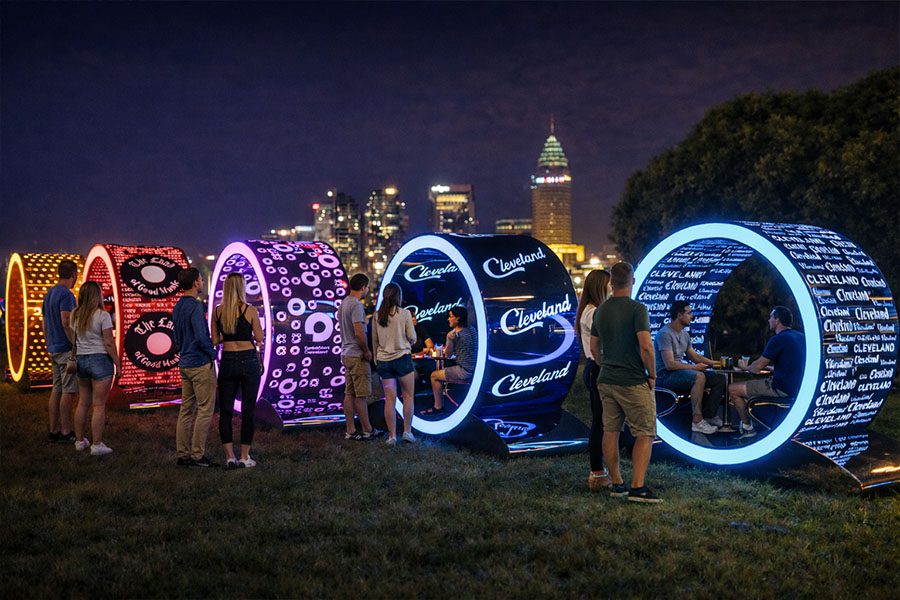
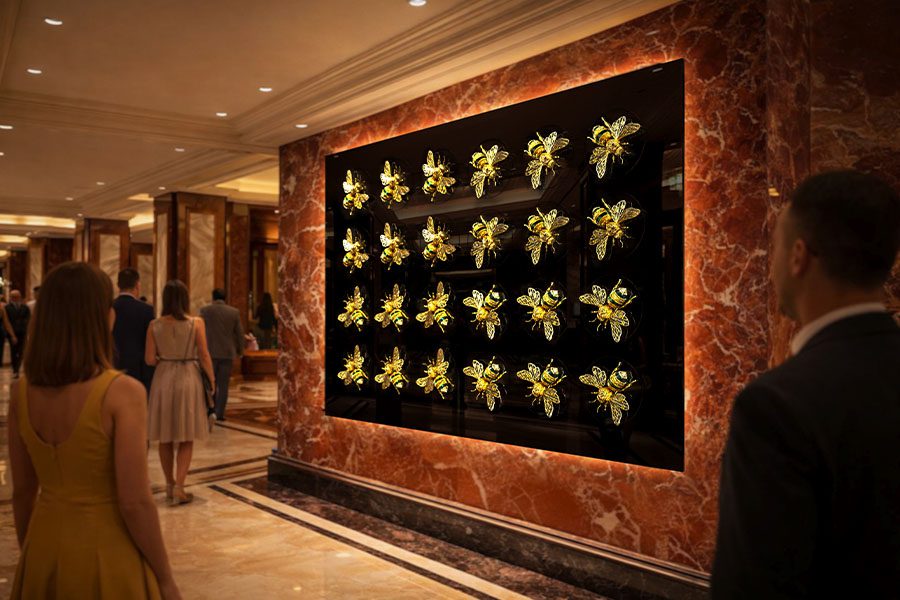
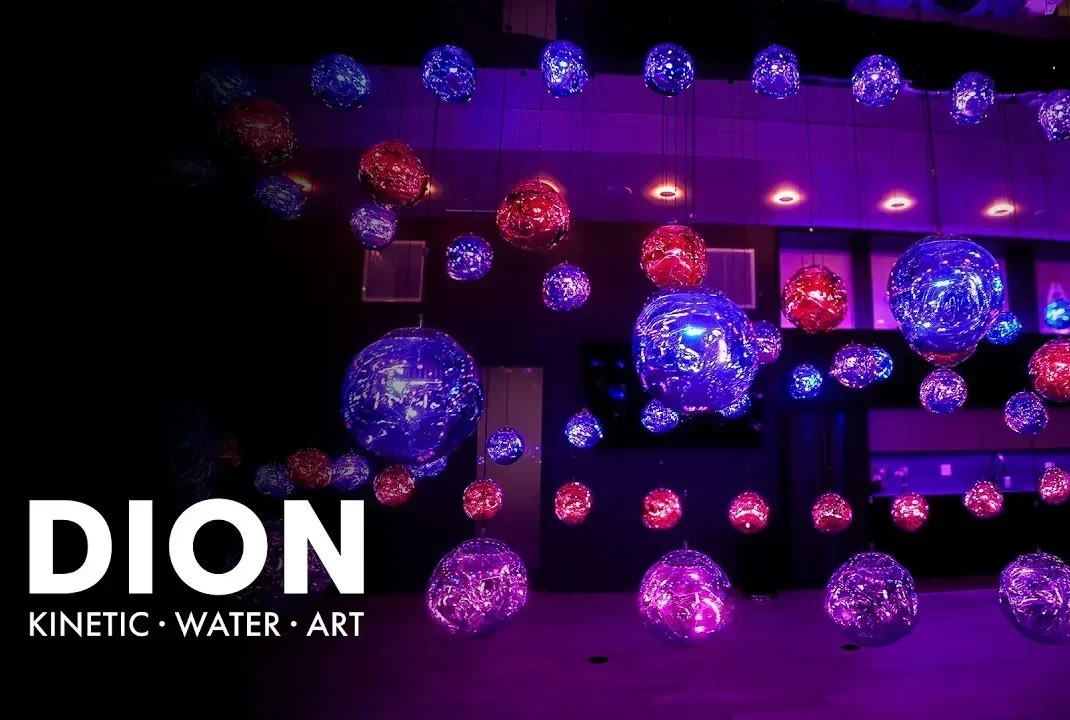


Capital cost, operational cost, and what developers are really comparing
Developers often frame this decision around budget, but the more meaningful comparison is not only initial cost. It is the relationship between capital cost, operational burden, lifespan, and strategic value.
A temporary activation may seem less expensive at first because it avoids the full investment required for a permanent work. But if a project relies on repeated activations to maintain energy, the cost logic changes quickly. Fabrication, transport, setup, removal, staffing, technical support, permissions, storage, insurance, and repeated programming cycles can accumulate into a far heavier operational model than expected. In some cases, a development ends up paying repeatedly for attention without ever building a durable public asset.
A permanent kinetic installation requires more commitment upfront, but it can deliver value across many years if it is properly integrated and maintained. Its cost should not be understood only as fabrication and installation. It should be understood as part of the capital logic of identity-building. When a permanent installation helps define the image of the project, organize a major public space, and remain relevant over time, it functions more like site infrastructure than event programming.
This is one reason serious US developers often choose permanent works for projects where the public realm is part of the long-term value proposition. They are not simply paying for art. They are investing in a component of the place itself.
What each option signals to the market
Developers also choose between these models based on the signal they want the project to send. A permanent kinetic installation communicates permanence, confidence, and an ambition to create lasting public identity. It suggests that art is being treated as part of the architecture of the project. A temporary activation communicates experimentation, flexibility, and responsiveness. It suggests that the project is alive, changing, and perhaps still defining itself.
Neither signal is inherently stronger. Their value depends on project type and project stage. In a mature luxury property, a flagship office environment, or a fully formed mixed-use center, too much reliance on temporary activation can make the place feel undercommitted or perpetually promotional rather than spatially resolved. In a newly launched district or early retail destination, a permanent installation alone may not generate enough immediate momentum if the broader public environment is not yet fully active.
This is especially relevant in US real estate because perception often starts moving before the place is complete. A development may be partially delivered but already competing in the public imagination. In that moment, temporary activation can be a smart tactic. But if the project never evolves beyond activation logic, it risks feeling like a place that is always advertising itself and never fully arriving.

When permanent works outperform temporary ones
Developers also choose between these models based on the signal they want the project to send. A permanent kinetic installation communicates permanence, confidence, and an ambition to create lasting public identity. It suggests that art is being treated as part of the architecture of the project. A temporary activation communicates experimentation, flexibility, and responsiveness. It suggests that the project is alive, changing, and perhaps still defining itself.
Neither signal is inherently stronger. Their value depends on project type and project stage. In a mature luxury property, a flagship office environment, or a fully formed mixed-use center, too much reliance on temporary activation can make the place feel undercommitted or perpetually promotional rather than spatially resolved. In a newly launched district or early retail destination, a permanent installation alone may not generate enough immediate momentum if the broader public environment is not yet fully active.
This is especially relevant in US real estate because perception often starts moving before the place is complete. A development may be partially delivered but already competing in the public imagination. In that moment, temporary activation can be a smart tactic. But if the project never evolves beyond activation logic, it risks feeling like a place that is always advertising itself and never fully arriving.
When temporary activation is the smarter choice
Temporary activation tends to be the smarter option when the project is in transition, when the public realm is not yet stabilized, or when the developer needs speed and adaptability more than permanence. It is particularly useful in phased developments, launch campaigns, interim public-realm conditions, leasing periods, and environments where the team wants to test scale, engagement, or public response before making a permanent commitment.
It can also be highly effective in districts where cultural programming is part of the business model. In those cases, the changing nature of the activation is not a weakness. It is the point. A project that wants regular press moments, seasonal renewal, or visitor return driven by novelty may benefit from temporary interventions that evolve with the calendar or tenant mix.
But temporary work becomes less effective when it is used to solve problems that are actually spatial. If a plaza lacks hierarchy, if an atrium feels oversized and centerless, if arrival lacks identity, or if a district has no recognizable anchor, temporary activation rarely resolves that at the deepest level. It can energize the site, but it usually cannot replace the role of a permanent element in structuring the place.
Why many US developers eventually choose both
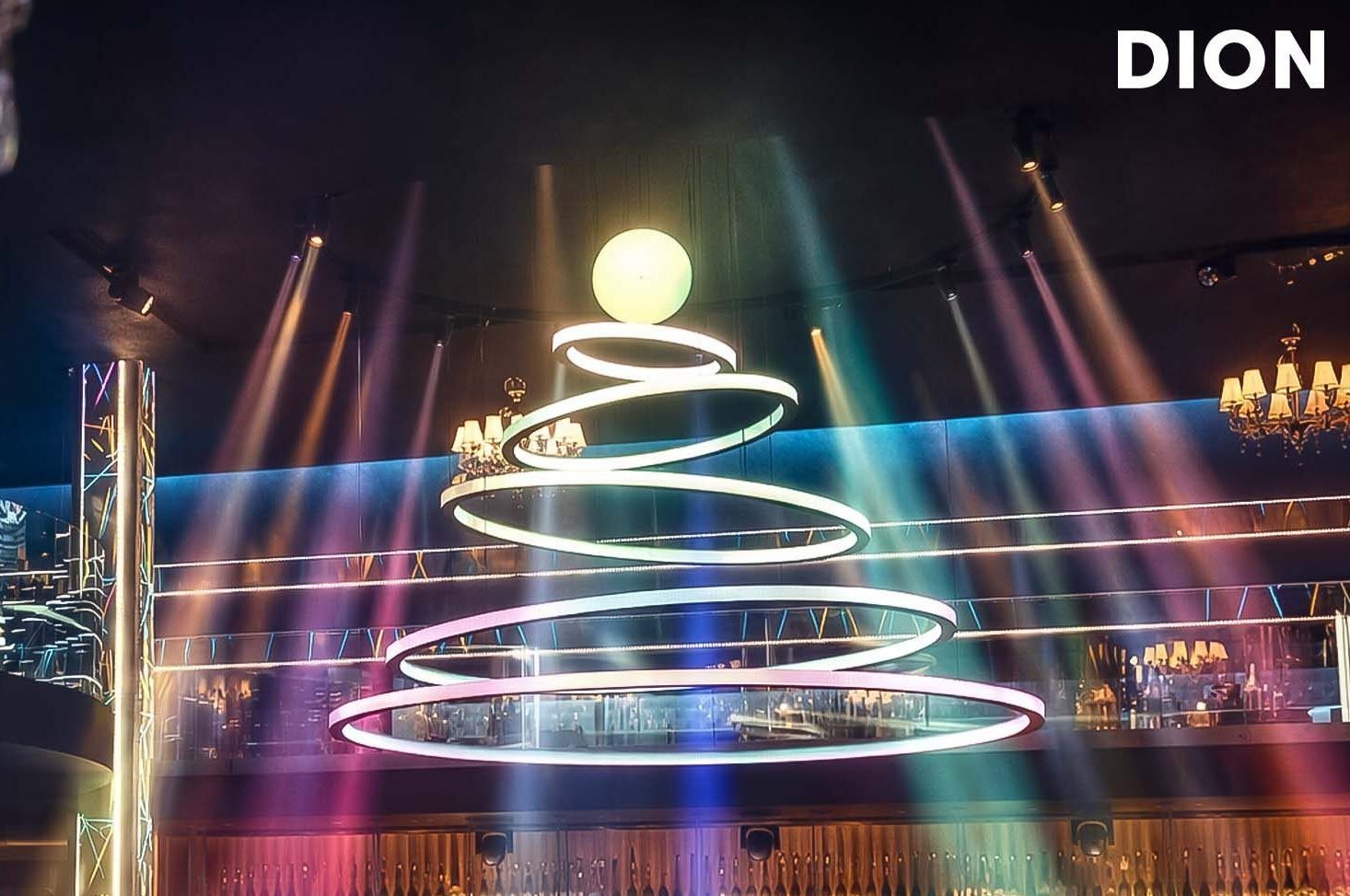
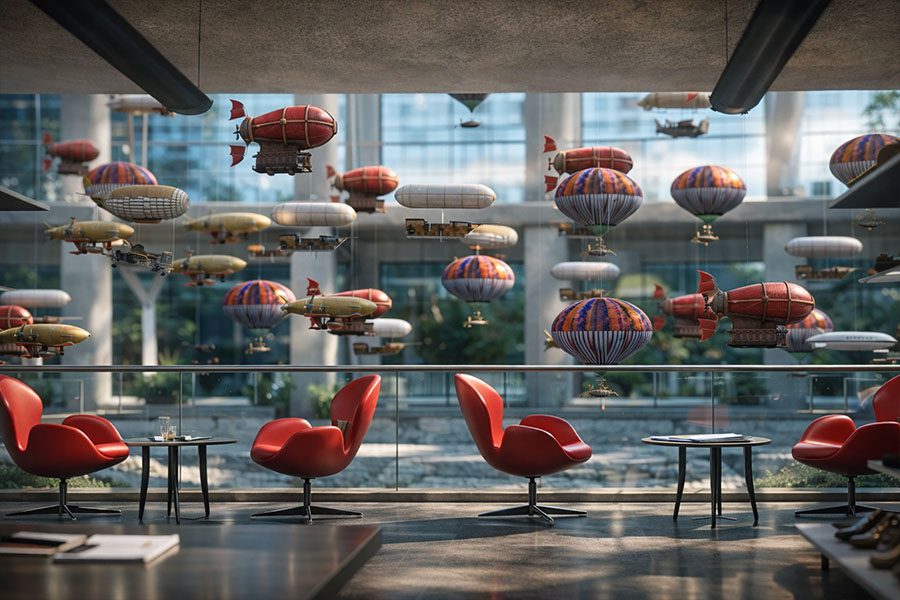
In practice, the most strategic US developers often do not treat this as a strict binary. They use permanent and temporary interventions differently, and often together. A permanent kinetic installation may establish the long-term identity of the project, while temporary activations create periodic renewal around it. In this model, the permanent work provides continuity, and temporary programming provides freshness.
This can be especially effective in large mixed-use districts, hospitality-led public spaces, and phased developments. The permanent installation becomes the stable landmark through which the site is remembered. Temporary activations bring seasonal or campaign-specific energy without forcing the entire identity of the place to depend on novelty.
The crucial point is that these two layers should not be confused. A permanent work should not be expected to function like event programming, and a temporary activation should not be expected to generate the same depth of long-term spatial meaning as a permanent landmark. When each is used for what it does best, the combination can be powerful.


Why earlier planning changes the decision
The question of permanent versus temporary is often discussed late, when a project team is already searching for a public-facing intervention. But the strongest decisions happen earlier, when the team can still define what role art is meant to play in the life of the project.
If the goal is to create lasting identity, strengthen public-space hierarchy, and integrate movement into the architectural language of the development, then a permanent kinetic installation should be considered early enough to shape those conditions. If the goal is launch energy, leasing visibility, or testing engagement in an evolving site, then temporary activation may be more appropriate. The problem begins when the wrong solution is asked to solve the wrong need.
DION ART STUDIO is most valuable not as a studio that only helps compare options, but as a full-cycle creative and technical partner capable of turning the right decision into a built result. The issue is not only whether a project needs infrastructure or programming, identity or activation, permanence or adaptability. It is also whether the chosen direction can be designed, engineered, fabricated, installed, and delivered with enough quality to perform as part of the place.
That is where full-scope capability matters. A permanent kinetic installation has to be more than a compelling concept. It has to be structurally resolved, fabricated to the right tolerances, integrated into the architecture and public realm, installed correctly, commissioned, and built to perform over time. Temporary activations also require real delivery capacity: fabrication, logistics, technical coordination, installation, operation, and removal. The value of working with DION is not only that we understand the distinction. It is that we create and realize these works from concept to completion — including kinetic installations, public art sculptures, interactive art, and fountains.
Contact Us
Choosing between a permanent kinetic installation and a temporary activation requires more than comparing duration or visual effect. It requires understanding what the project needs from its public environment: long-term identity, launch momentum, spatial hierarchy, repeat engagement, or a combination of these goals.
At DION ART STUDIO, we do more than help shape the right strategic direction. We design, engineer, fabricate, and deliver kinetic installations, public art sculptures, interactive works, and fountains from A to Z. That includes concept development, design coordination, engineering, fabrication, technical integration, on-site installation, and final realization.
From permanent landmark installations to temporary activations that support evolving developments, our role is not limited to defining the right approach. We turn that approach into a built result — one that can perform within the architectural, commercial, and experiential logic of the site.
If you are evaluating whether a US development needs a permanent kinetic landmark, a temporary activation, or both, the most useful moment to make that decision is before the public-realm strategy is fully fixed. The right choice is not only the one that appears more compelling on paper. It is the one that can be properly designed, built, and delivered as part of the future of the place.
A permanent kinetic installation is intended to remain part of the project long term and typically contributes to identity, spatial structure, and public memory. A temporary activation is designed for a shorter period and usually supports programming, launch energy, or short-term engagement.
It depends on the project. Temporary activations often require less upfront investment, but repeated activations can accumulate significant operational costs over time. Permanent installations require more initial commitment but may deliver longer-term value as part of the project’s identity.
Temporary activation is often chosen during launch phases, phased developments, interim public-realm conditions, leasing campaigns, or when a team wants to test engagement before committing to a permanent work.
It is usually the better choice when a development needs a lasting landmark, a strong public-facing identity, or an installation that can be integrated into the architecture and public space for the long term.
Yes. Many developments use a permanent installation as a long-term anchor and temporary activations as seasonal or campaign-based layers that keep the public realm dynamic.
Written by

Сo-founder & Creative director of DION ART
Master of Arts in Art Education, Public Art (School of the Art Institute of Chicago, USA)
Share this post

