Why US Developers Add Public Art to Mixed-Use Developments
In the United States, mixed-use developments have moved far beyond the simple combination of residential, retail, office, and hospitality functions. The most successful projects now operate as carefully shaped urban environments, where identity, perception, and public experience directly influence commercial performance.
Within this context, public art has become a strategic development tool rather than a cultural afterthought. Sculptures, kinetic installations, digital artworks, and interactive environments are increasingly considered during the early stages of masterplanning, not because they decorate a project, but because they help define how the project works spatially and how it is understood by the public.
For US developers, public art in mixed-use developments is tied to placemaking, differentiation, leasing appeal, and long-term asset value. Installations can organize spatial experience, draw people into key zones, support branding, and reinforce the identity of a development in a crowded market. In large projects, they often operate less as isolated artworks and more as pieces of public-facing infrastructure.
Understanding why developers invest in public art requires looking beyond image or prestige. The real question is how art functions inside a complex urban system, and why certain projects use it to strengthen both experience and performance.

Public art as a placemaking strategy
The central challenge in mixed-use development is not simply to build square footage, but to create a place that people remember, return to, and use across different times of day. Unlike single-use properties, mixed-use environments depend on continuous activation. Office workers arrive in the morning, residents occupy the site in the evening, shoppers and visitors move through it throughout the day, and hospitality functions extend activity even further.
Public art helps unify these different audiences by creating shared points of focus. In large environments, installations are often positioned where multiple streams of movement overlap: at major plazas, transitions between retail and office zones, arrival sequences, or pedestrian crossings between buildings. In these locations, art does not merely fill space. It structures it.
A landmark installation can give visual order to an otherwise open or fragmented environment. It creates a spatial reference point, defines the character of a plaza, and gives the development a stronger public identity. In successful projects, this is what turns circulation space into destination space.
Hudson Yards offers a clear example. Whatever one’s view of Vessel as an object, its role within the larger project is easy to understand. It concentrated attention, defined the public core of the development, and created a recognizable image that became inseparable from the district itself. That is the scale of influence public art can have when it is conceived as part of placemaking rather than as decoration.
Why developers see commercial value in public art
Developers do not invest in public art simply because it makes a project look more sophisticated. They invest because well-integrated installations can strengthen the commercial logic of a development.
In mixed-use environments, foot traffic is not enough on its own. What matters is how people move, where they pause, what they remember, and how long they stay within the site. Installations can create moments of compression and release within circulation flows. They draw the eye, slow movement, create pause points, and increase the likelihood that visitors will engage with surrounding retail, dining, and public areas.
This is especially relevant in projects where the public realm is expected to do economic work. A memorable installation can make a plaza feel active even before a visitor enters a tenant space. It can support tenant visibility, improve the perceived energy of a district, and make the development more shareable in media and social channels without relying entirely on temporary programming.
Developments such as The Grove demonstrate how curated public environments — including sculptures, fountains, and programmed gathering spaces — contribute to long-term destination appeal. The point is not that every project needs spectacle. The point is that public-facing elements which hold attention and create memorable experiences can support stronger commercial ecosystems around them.
For developers, that translates into more than image. It influences tenant perception, visitor behavior, and the broader ability of a project to function as a destination rather than a collection of buildings.
Public art and the branding of mixed-use developments
In competitive urban markets, mixed-use developments must communicate a distinct identity. Architecture alone does not always achieve this. Many projects share similar façade systems, material palettes, and urban design strategies. What often makes one development legible and memorable is the presence of a clear public-facing symbol.
This is where public art becomes particularly valuable. A strong installation can operate as a visual signature for a project. It becomes the element that appears in marketing campaigns, in press photography, in social media images, and in the mental map of the city. It gives a development recognizability beyond its leasing brochure.

Miami Design District illustrates this well. Art and architecture are not treated there as separate layers. Large-scale installations, sculptural objects, and public interventions are part of the district’s identity as a cultural and luxury destination. The public realm is curated with the same strategic intent as the tenant mix.
For developers, this matters because branding is not only verbal or graphic. It is spatial. It is built through arrival sequences, visual markers, and memorable public moments. In that sense, landmark art functions as branding infrastructure. It shapes how a development is perceived before a visitor has interacted with a single tenant.
Spatial hierarchy, navigation, and user perception
One of the less discussed but highly important roles of public art in mixed-use developments is its contribution to spatial clarity. Large projects often involve multiple buildings, layered circulation routes, podiums, plazas, terraces, and transitions between public and semi-public zones. Without clear visual hierarchy, these environments can feel anonymous or disorienting.
Installations help solve that problem by acting as orientation devices. People do not navigate large sites only through signage. They also navigate through memory, visibility, and spatial association. They meet near the sculpture, move toward a visible landmark, or understand a plaza as the center of the development because an installation defines it as such.
Architects and urban designers often use art to reinforce primary axes, terminate views, strengthen key nodes, or distinguish one zone from another. In this way, art becomes part of the project’s spatial logic. It helps visitors read the environment intuitively.
This matters even more in developments designed to attract repeat visits. When a place is easy to understand and visually memorable, people are more likely to feel comfortable in it, return to it, and recommend it to others. Public art contributes to that perception not by replacing architecture, but by sharpening how architecture is experienced.
Why early integration matters
The strongest public art in mixed-use developments is rarely added at the end. It is planned early, when the development team can still make meaningful decisions about location, scale, infrastructure, visibility, and long-term maintenance.
When installations are integrated during masterplanning or concept design, they can be aligned with circulation flows, structural logic, public space strategy, and the broader identity of the project. This allows the artwork to function as part of the environment rather than as a freestanding object placed into leftover space.
Early coordination also affects the technical success of the installation. Structural loads, anchoring strategies, power requirements, control systems, drainage, lighting, maintenance access, and sightline studies all influence whether an artwork feels fully integrated or awkwardly inserted. In large public environments, these decisions are not secondary. They shape both performance and perception.
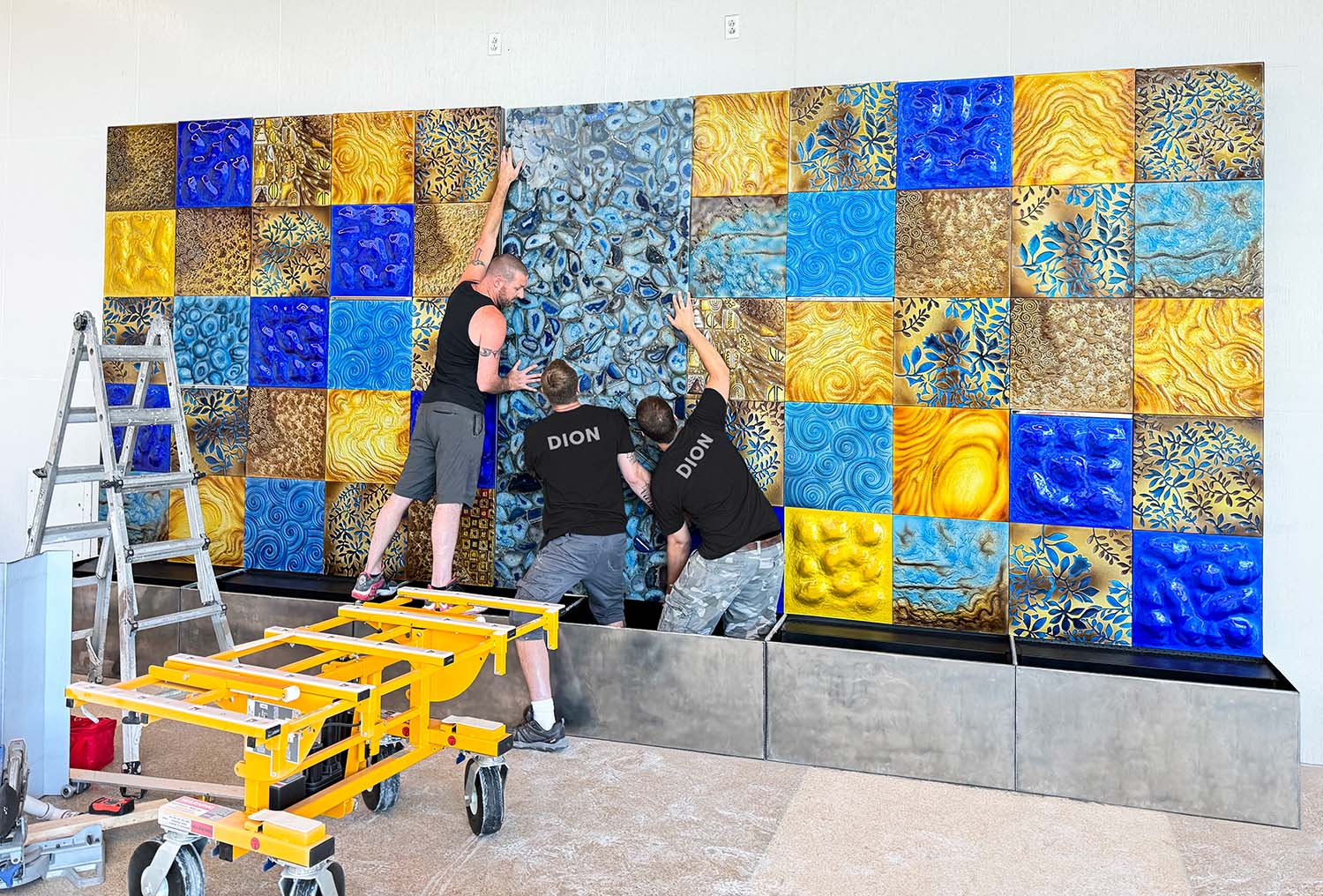
DION ART STUDIO working at the intersection of art, architecture, and engineering are often brought in during these early phases because the key questions are not only artistic. They are spatial, technical, operational, and urban. The earlier these issues are addressed, the more coherent the final result tends to be.

What happens when art is added too late
One of the most common weaknesses in mixed-use projects is the late addition of art as a branding gesture rather than as a spatial strategy. By the time this happens, the best locations may already be fixed, infrastructure may be insufficient, circulation patterns may be locked in, and the installation is forced to respond to a completed environment instead of shaping it.
The result is often a sculpture that looks expensive but does very little for the project. It may occupy a plaza without organizing it, sit in a circulation zone without influencing movement, or appear visually disconnected from the architecture around it. In some cases, the artwork becomes an object to photograph, but not a meaningful part of the public experience.
Late-stage integration also creates technical compromises. Maintenance access may be poorly resolved. Lighting may feel improvised. Foundations, service routes, and control systems may require costly adaptation. What should have been a seamless component of the development becomes a standalone intervention with limited spatial effect.
For developers, this is not just an aesthetic issue. It is a missed opportunity. The difference between art that merely occupies space and art that strengthens the logic of a place often depends on whether it was considered early enough.
Why mixed-use developments benefit more than most building types
Public art can add value to many environments, but mixed-use developments benefit from it in a particularly direct way because they depend on layered public experience.
An office building can succeed with limited public activation outside working hours. A mixed-use development cannot. It must remain legible, attractive, and socially active across different user groups and time frames. Public art helps support that continuity by creating shared focal points that connect residential, retail, hospitality, office, and public-realm functions.
A central installation can give coherence to an otherwise complex development. It can link different program elements, concentrate social activity, and create a public identity that belongs to the entire site rather than to one tenant or one building.
This is why developers increasingly treat public art as part of the development strategy itself. In mixed-use environments, the public realm is not residual space. It is one of the project’s core assets, and art can play a major role in making that asset work harder.
The shift toward kinetic and interactive installations
In recent years, many developers have moved beyond static sculpture and shown greater interest in kinetic and interactive installations. This shift reflects a broader change in how public space is being used and how visitors engage with contemporary environments.
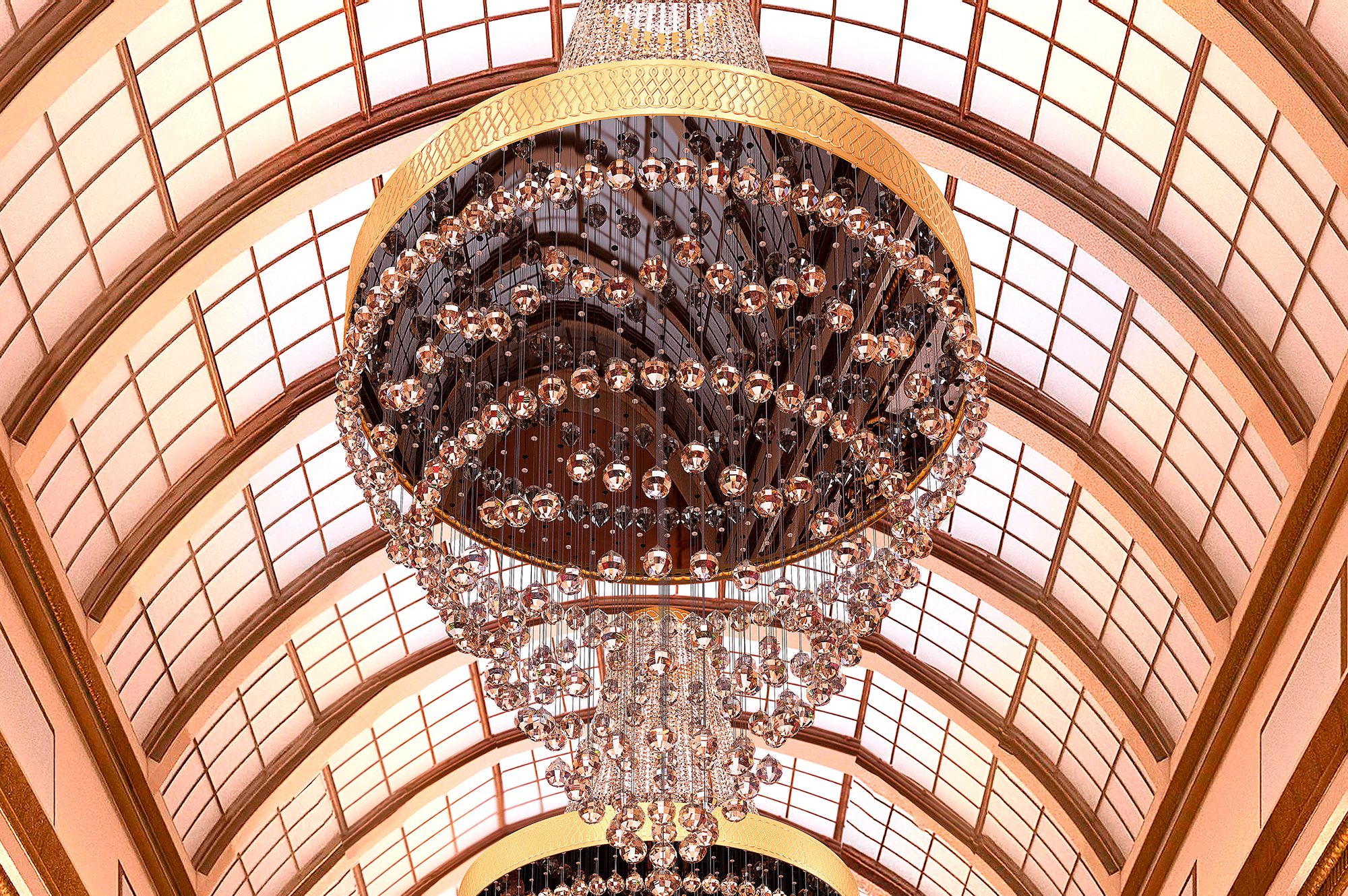
Movement attracts attention differently from static form. Responsive installations create anticipation, variation, and repeat value. They encourage visitors to pause, observe, interact, and return. In mixed-use settings, that matters because the public environment increasingly functions as an experience platform, not simply a circulation field.
Kinetic systems, programmable lighting environments, and interactive installations allow a public artwork to change over time. They can respond to weather, presence, data, or programmed scenarios. This makes the environment feel active and less fixed, which is especially powerful in developments competing for relevance in dense urban markets.
That said, the value of interactivity lies not in novelty alone. The most effective projects are those where movement or responsiveness strengthens the spatial and architectural concept of the site. Technology does not make an installation successful by itself. Integration does.
Public art has become a meaningful component of mixed-use development strategy in the United States because it operates across several levels at once. It contributes to placemaking, sharpens spatial hierarchy, supports wayfinding, reinforces project identity, and strengthens the public experience on which mixed-use environments depend.
For developers, installations are not simply cultural additions placed into finished projects. At their best, they are strategic interventions that shape how a place is perceived, remembered, and used. They help developments function not only as real estate products, but as destinations with recognizable character. As American mixed-use developments continue to evolve, public art will remain valuable not because it adds visual interest, but because it helps make complex urban environments more legible, more engaging, and more commercially resilient.

Contact Us
At DION ART STUDIO, we work with developers, architects, and urban planners from the early stages of a project to design and deliver kinetic and public art installations that operate as part of the architectural system. Our process includes concept development, spatial integration, engineering coordination, fabrication, and installation planning, with a focus on creating works that do more than occupy space — they structure it, activate it, and help define the identity of the development.
If you are planning a mixed-use project in the United States and evaluating how public art can support placemaking, visitor engagement, and long-term project value, this is the stage at which the conversation is most useful. We are available to discuss concepts, technical approaches, and implementation strategies in relation to your site, design phase, and development goals.
Because public art can support placemaking, strengthen project identity, attract visitors, and improve the public experience that mixed-use developments rely on.
Its impact is usually indirect, but it can contribute to stronger visitor engagement, improved tenant perception, broader destination appeal, and premium value in well-designed public environments.
Common locations include central plazas, arrival zones, pedestrian intersections, transitions between program elements, and other points where visibility and movement overlap.
Static sculpture remains important, but many developments increasingly favor kinetic and interactive installations because they create stronger visitor engagement and repeat experience.
Ideally during masterplanning or early concept design, when the installation can be properly integrated into the architecture, infrastructure, circulation, and long-term maintenance strategy.
Written by

Сo-founder & Creative director of DION ART
Master of Arts in Art Education, Public Art (School of the Art Institute of Chicago, USA)
Share this post