
INTERACTIVE ART
Brings meaning and movement to any space
At DION ART STUDIO, we create interactive art where the viewer becomes a participant. It’s not an “object to look at,” but a living experience: installations respond to presence, movement, touch, and sound, changing in real time — turning space into a stage for emotion and interaction.
In today’s world, attention is the most valuable resource. Interactive art installations help capture it: they engage, surprise, and build a lasting association with a place and a brand. These projects function as an infrastructure of experience — creating a “wow” effect, stimulating UGC/social sharing, and transforming locations into points of attraction.
A single interactive installation can become the main magnet of a space — in a shopping mall, hotel, airport, museum, exhibition, or public interior. Light, kinetics, sound, and digital scenarios make every interaction unique: people come back again to “play” with the piece in a new way.
DION ART STUDIO designs and produces immersive Interactive Art solutions — from light and kinetic objects to full-scale interactive zones. We don’t simply add technology — we turn it into an artistic language that enhances architecture and creates a memorable story.
Whether it’s an urban space or a commercial venue, we help you create an interactive art object that lives with people — engaging, inspiring, and making a place truly recognizable.
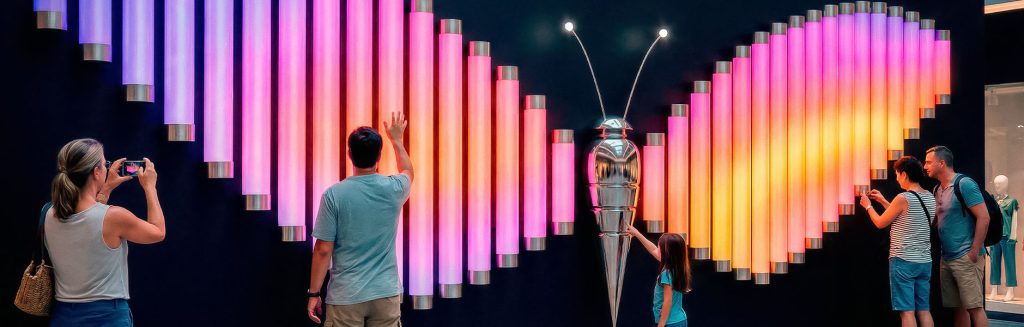
Interactive Installation Concepts


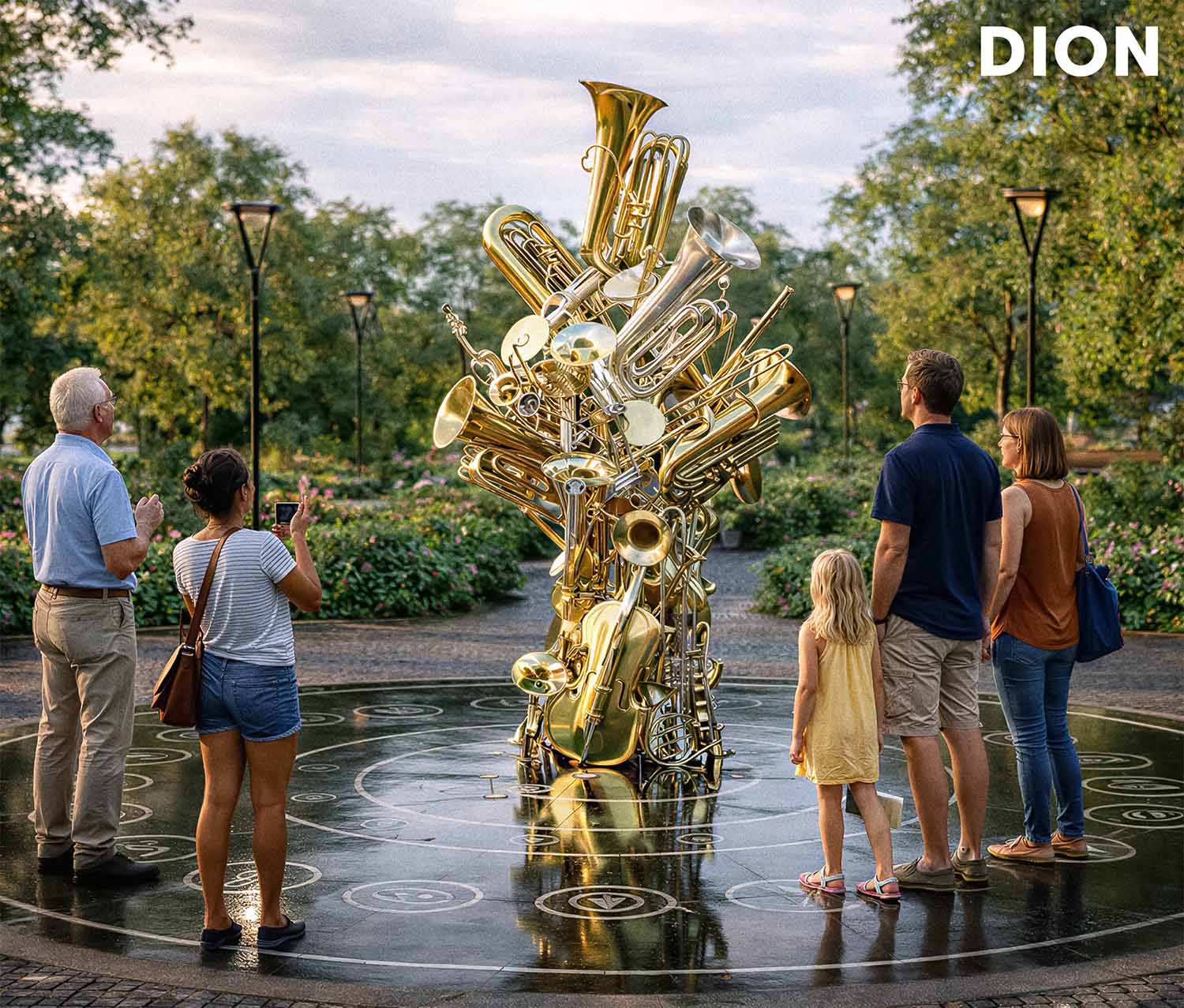
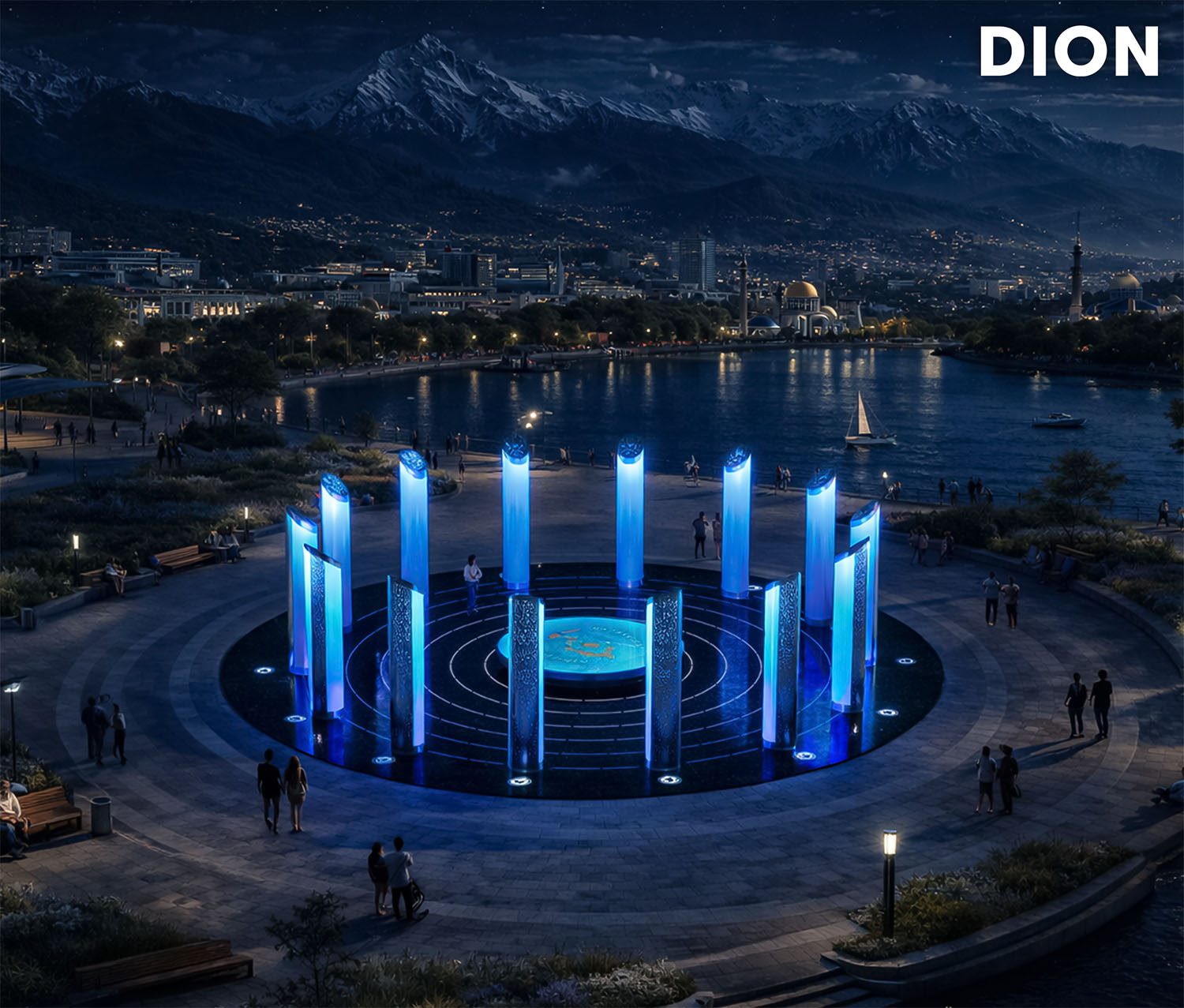
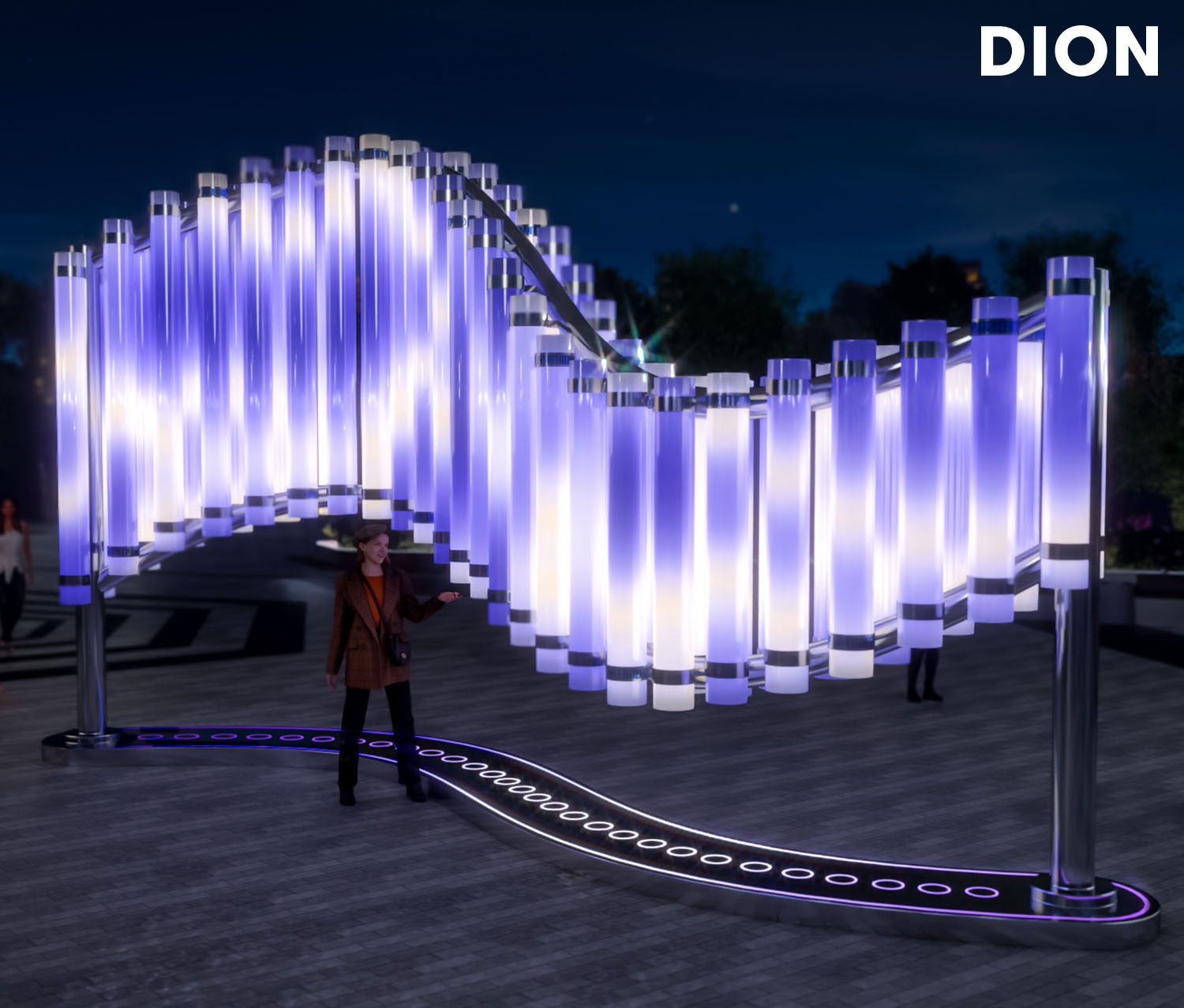


FAQ: Interactive Installations for Cities and Businesses
Yes. Every interactive installation is developed with careful consideration of its context — architecture, cultural identity, audience, and the strategic goals of a city or brand.
We can integrate:
• brand colors and visual identity;
• local symbols and narratives;
• custom light, sound, and interaction scenarios;
• branded digital mechanics (QR integrations, tailored content, special modes).
As a result, the installation becomes not just an art object, but a meaningful part of the place’s or brand’s identity.
An interactive installation is an art object or spatial environment that responds to people and its surroundings in real time — through touch, footsteps, gestures, presence, or sound. Unlike a static sculpture, an interactive work comes to life through visitor engagement, turning viewers into participants.
In practice, interactive installations often serve as experience-driven landmarks: they strengthen a place’s identity, create a focal point, generate media impact (UGC and social sharing), and enhance the image of a destination or brand.
Interactive installations can be categorized by interaction model and by medium.
By interaction type:
- response to movement and presence (the installation detects a person within the space);
- response to touch (touch sensors with personalized light or sound feedback);
- response to footsteps (floor panels, sensor tiles, interactive pathways);
- interaction through a smartphone or digital layer (mobile-based scenarios).
By medium and technology:
- interactive light (DMX/LED systems, dynamic lighting scenarios);
- light and sound (soundscapes, music, reactions to noise or voice);
- interactive kinetic systems (moving elements that change form through interaction);
- immersive multimedia environments (tunnels or zones activated by audience participation).
The cost of an interactive installation is always calculated individually, because every project is a unique combination of art, engineering, architecture, and technology. We follow a transparent process: after discussing the brief, you receive a detailed estimate covering concept development, 3D visualization, production, delivery, installation, and commissioning.
Key factors that affect the budget:
- scale and dimensions;
- complexity of design and engineering;
- materials (glass, bronze, stainless steel, stone, polycarbonate, acrylic, etc.);
- technologies (LED, sensors, multimedia, specialized software);
- site and installation conditions (foundation, soil, utilities, geography);
- timeline;
- scope of documentation and visualizations;
- original artistic concept development.
Approximate ranges:
- small interactive installations — 100,000–200,000 USD;
- medium-scale projects — 200,000–500,000 USD;
- large and complex interactive installations — from 500,000 USD.
The timeline depends on the scale and technological complexity of the project. On average, most projects take 3–6 months, while large-scale or technically complex installations may take 6–12 months.
What affects the timeline:
- project complexity (interactive scenarios require development, testing, and fine-tuning);
- object size (production, logistics, installation);
- materials;
- integration of sensors, lighting, and software;
- site conditions (foundation, terrain, utilities);
- approvals and permits.
Typical stages:
- Concept development, sketches, and preliminary 3D visualization.
- Design and engineering (drawings, calculations, specifications, estimate).
- Approvals.
- Production.
- Factory assembly and testing.
- Delivery.
- Installation.
- Commissioning (lighting, mechanics, interactivity).
- Project handover and transfer of documentation.
Yes. 3D visualization is an essential stage of the process: it allows you to see in advance how the installation will look in its real environment and approve all key decisions before production and installation begin.
What 3D visualizations provide:
- a clear understanding of form, proportions, materials, and lighting;
- accuracy (models are created using real dimensions and engineering parameters);
- flexibility (changes are faster and more cost-effective at the modeling stage);
- presentation materials for investors, partners, and PR.
The long-term performance of an interactive installation depends on three things: quality materials, solid engineering, and regular maintenance. We design our installations so they are easy to inspect, clean, and service.
A typical maintenance plan includes:
- regular inspections;
- surface cleaning;
- preventive maintenance of engineering systems;
- service support when needed.
For interactive projects, depending on the system specification, maintenance may also include sensor checks, adjustment of lighting and sound scenarios, and routine servicing of control systems.
We provide clear and transparent warranty terms because public and interactive installations must be reliable and built for long-term operation. Specific warranty periods and the scope of coverage are defined in the contract and depend on the project.
Basic warranty framework:
- static installations — 2 years (structure, materials, finishes);
- structural elements — extended warranty of up to 5 years, depending on the project;
- engineering equipment — 2 years (mechanisms, lighting, and control systems).
Warranty coverage typically includes the correction of material defects, repair or replacement of components, correction of manufacturing defects, and compliance with safety and durability standards.
Interactive installations are ideal for urban, public, and commercial spaces where the goal is to create a point of attraction and a strong emotional experience.
Typical locations:
- city squares, parks, and waterfronts;
- airports and railway stations;
- museums and cultural venues;
- hotels, shopping malls, and public spaces within development projects.
Interactive formats work both day and night, create highly shareable environments, and strengthen PR impact through photo, video, and user-generated content.
Yes. We actively collaborate with architects, interior designers, landscape architects, and engineers to ensure that each installation is seamlessly integrated into the architecture and overall concept of the space.
Formats of collaboration:
- expert consultations (format, materials, technologies, engineering);
- joint concept development;
- technical development (calculations, structural schemes, control systems);
- production and installation;
- site supervision.
The process is transparent and step-by-step:
1.Initial contact
- By Phone: Call us by phone number:
for USA +1-855-323-8980;
for Europe +380(44) 545-70-70. - By Email: Send us an email to:
for USA InfoUS@dion.art;
for Europe InfoEU@dion.art. - Through the Contact Form: Fill out the form on the website, providing your contact information and a brief description of the project.
- Via Social Media: Send us a direct message on Instagram or Facebook.
2. Consultation: goals, audience, location, timeline, and budget.
3. Concept development and 3D visualizations.
4. Contract: project description, timeline, cost, payment schedule, warranty, and maintenance.
5. Technical documentation.
6. Production.
7. Delivery and installation.
8. Commissioning and project handover (testing, setup, documentation, and training if required).
9. Service and support.
Check out the album
with our ideas

Check out
the album with
our ideas
Ready to transform your space?
Contact DION ART STUDIO for a consultation.
Your artist Igor Velikiy

Your artist
Igor Velikiy